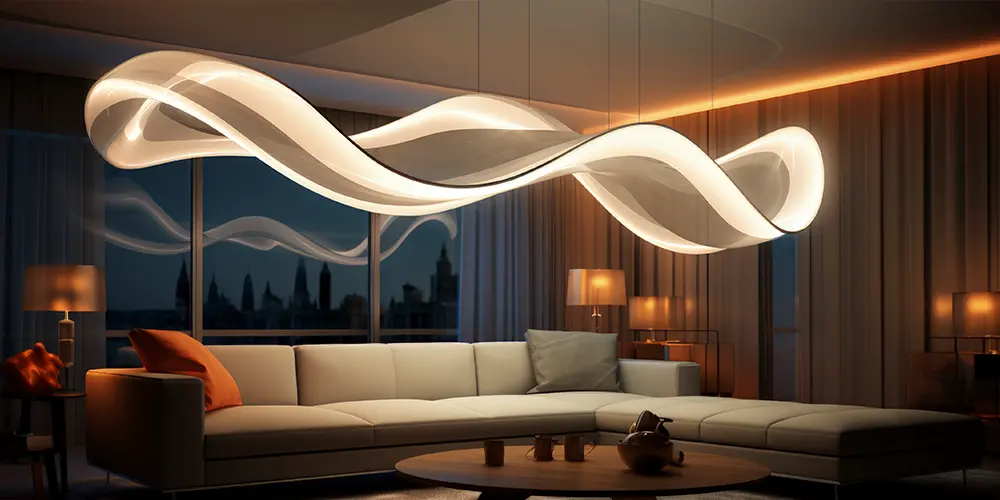
Lighting does more than illuminate a room — it shapes how we feel, think, and interact within a space. The right lighting can make a small room feel open, turn a plain corner into a cozy retreat, or set the perfect tone for relaxation. Understanding how lighting influences mood helps you design spaces that feel both beautiful and comfortable
1. Warm vs. Cool Lighting
Light color plays a huge role in mood.
Warm lighting (yellowish tones) creates a sense of comfort and calm — ideal for living rooms, bedrooms, or dining areas. It encourages relaxation and connection.
Cool lighting (bluish tones), on the other hand, promotes alertness and focus. It works best in kitchens, bathrooms, or workspaces where clarity and brightness matter most.
2. Layered Lighting for Balance
A well-designed room uses a mix of ambient, task, and accent lighting.
- Ambient lighting provides overall brightness, setting the foundation for the room’s atmosphere.
- Task lighting focuses light on specific activities, like reading or cooking.
- Accent lighting highlights décor elements, artwork, or architectural features.
When layered together, these three types of lighting bring depth, dimension, and personality to any room.
3. The Power of Dimming
Adjustable lighting helps you control mood instantly. Bright light energizes mornings and helps with focus, while dimmed lighting in the evening encourages rest and comfort. Dimmers also allow you to shift your room’s tone — from vibrant and lively to calm and intimate — with just a touch.
4. Natural Light Connection
Nothing matches the warmth of natural sunlight. Maximizing daylight through large windows or reflective surfaces can improve mood, reduce stress, and make a space feel alive. Even artificial lights designed to mimic daylight can help maintain that natural balance when sunlight is limited.
5. Highlighting Personality Through Light
Lighting is also a form of self-expression. The placement, brightness, and even the style of your fixtures say something about your personality. A minimalist pendant might speak of simplicity and order, while a bold chandelier can add drama and elegance to the room.
Final Thoughts
The mood of your home depends as much on its lighting as its furniture or color palette. Every room tells a story through light — from calm evenings under a warm glow to bright mornings filled with energy. Thoughtful lighting design turns an ordinary living space into a place that feels truly alive and connected to the way you live.